




Introduction
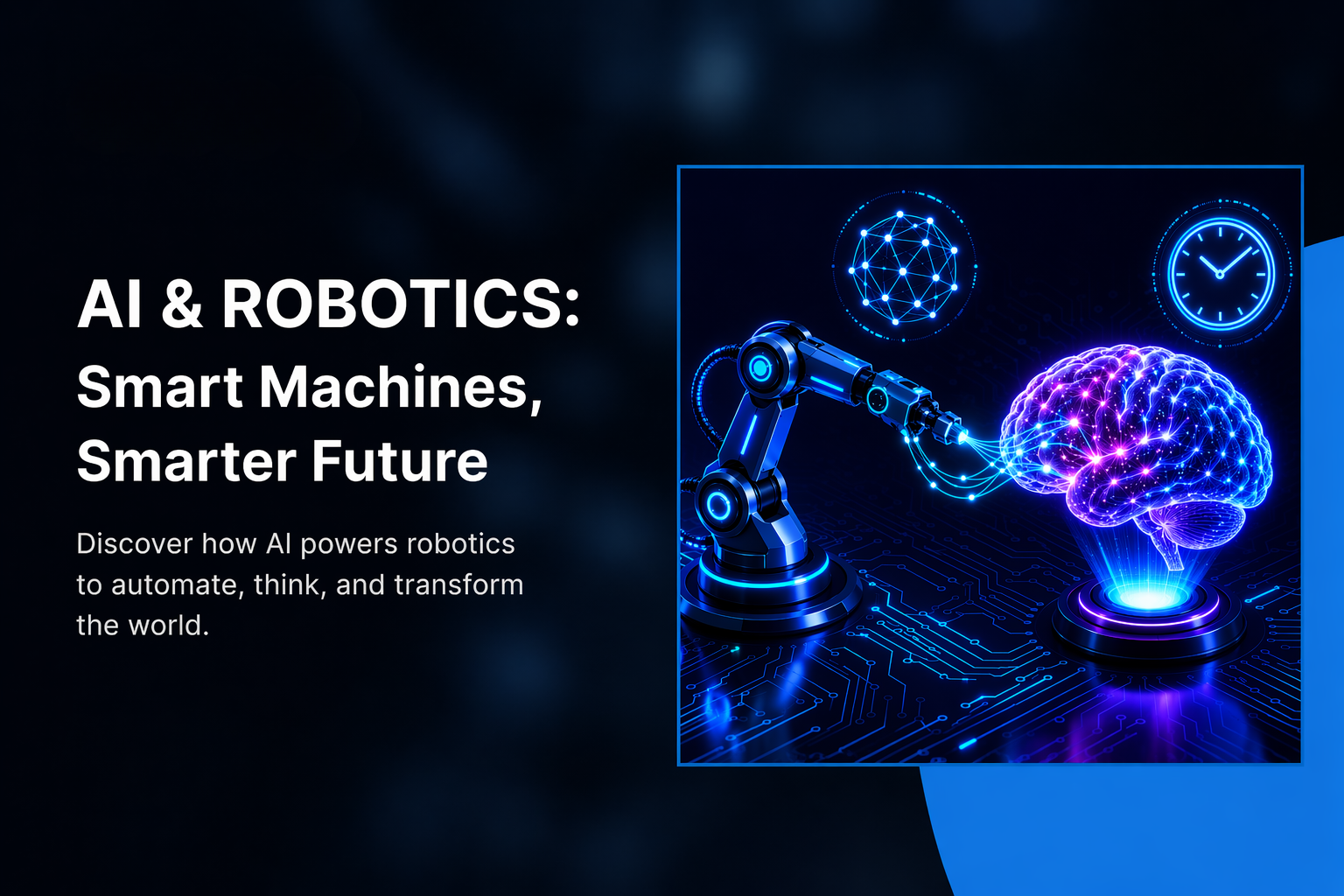
Robotics is shifting from rule-based automation to intelligent systems that can learn, adapt, and operate in complex environments. This evolution is powered by the integration of the Robot Operating System (ROS) with Artificial Intelligence (AI).
ROS offers a modular and scalable framework, while AI brings perception, reasoning, and decision-making capabilities. Together, they enable the development of truly autonomous systems.
Understanding ROS: A Middleware for Scalable Robotics
ROS is an open-source middleware that simplifies robotic system development through a distributed architecture.
Core components include:
- Nodes: Independent processes handling specific tasks
- Topics: Channels for asynchronous data communication
- Services: Request-response interactions
- Actions: Long-running, interruptible tasks
- Parameter Server: Centralized configuration management
ROS allows seamless integration of hardware and software, making it a standard in robotics development.
Artificial Intelligence in Robotics
AI enhances robotics by enabling adaptability and intelligence.
Key domains include:
- Computer Vision (object detection, scene understanding)
- Machine Learning (pattern recognition)
- Deep Learning (feature extraction from complex data)
- Reinforcement Learning (learning through interaction)
- NLP (human-robot communication)
This transforms robots from reactive machines into intelligent agents.
Architectural Integration of ROS and AI
AI models are typically embedded into ROS nodes.
Typical workflow:
- Sensor Input (camera, LiDAR, etc.)
- Preprocessing (data filtering and transformation)
- AI Inference (deep learning models)
- Decision Making (planning or learned policies)
- Actuation (robot movement or actions)
This modular structure ensures scalability and real-time performance.
Key Technologies for Integration
- TensorFlow / PyTorch for AI model deployment
- OpenCV for vision processing
- ROS2 for real-time and distributed systems
- MoveIt! for motion planning
- NVIDIA Isaac ROS for accelerated AI pipelines
Advanced Capabilities
Intelligent Perception
Robots can understand environments using sensor fusion and AI models.
Autonomous Navigation
Robots navigate dynamically with obstacle avoidance and adaptability.
Learning-Based Control
Reinforcement learning enables robots to learn complex behaviors.
Human-Robot Interaction
Speech, gestures, and contextual understanding improve usability.
Real-World Applications
Autonomous Vehicles
AI + ROS enables perception, planning, and control.
Healthcare Robotics
Used in surgery, diagnostics, and patient assistance.
Industrial Automation
Smart factories use adaptive robots for efficiency and quality control.
Service Robots
Used in logistics, domestic assistance, and customer interaction.
Challenges and Limitations
- High computational requirements
- Real-time performance constraints
- Large data dependency
- System complexity
- Safety and reliability concerns
Future Directions
- Edge AI for low-latency processing
- 5G for real-time communication
- Swarm robotics for collective intelligence
- Explainable AI for transparency
- Wider adoption of ROS2
Conclusion
The integration of ROS and AI is redefining robotics. By combining modular system design with intelligent decision-making, robots are becoming autonomous, adaptive, and highly capable.
This synergy will continue to shape industries such as healthcare, manufacturing, and transportation.